Define the Golf you are buying
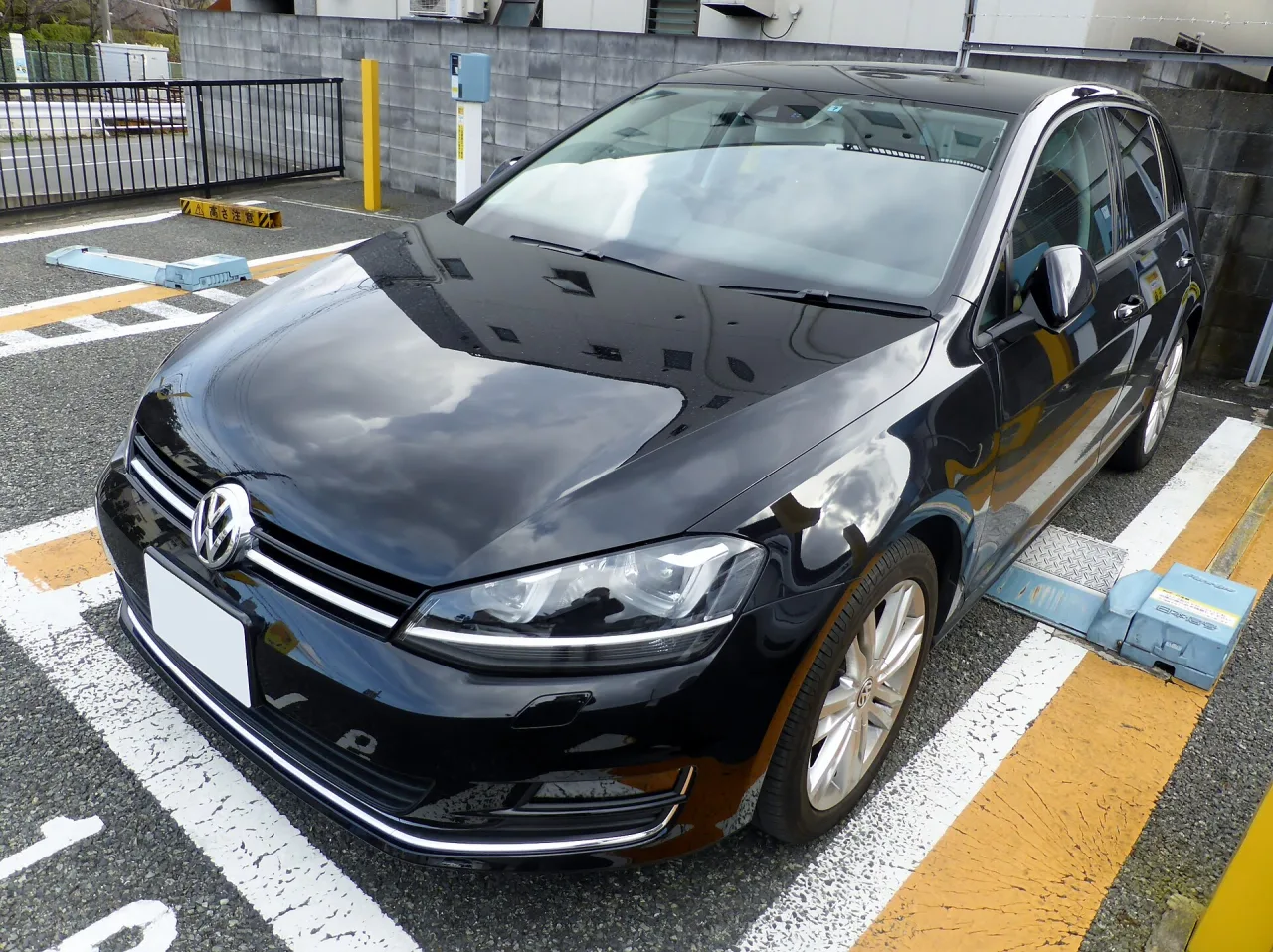
Golf VII is a broad family, including hatchback, Variant, performance versions and electrified models. Mixing these in one price comparison can hide important differences. Volkswagen dates the hatchback generation to 2012–2019 and documents its later model update separately. The informal 7.5 label is commonly used for the updated version. Ask for manufacture date and exact specification: first registration alone does not identify the engine, update or assistance equipment. Documents and inspection must confirm what the photographs suggest.
Choose around ordinary use
Write down your usual journeys, passengers, luggage and parking arrangements. Try child-seat access and load the items you actually carry. On a Variant, test the luggage opening and any advertised load equipment. Inspect a panoramic roof or other optional equipment separately if fitted. Trim names can have different content between markets, so use the factory specification and a demonstration rather than assuming that a familiar badge guarantees every feature.
TSI or TDI
Repeated short urban trips and frequent longer journeys create different requirements. Consider engine warm-up and the needs of emissions treatment systems without imposing an arbitrary annual-mileage rule. For any engine, establish its exact code, emissions specification and documented maintenance. Similar capacity or power does not make two engines identical. Ask what route an owner's consumption figure describes and calculate your own fuel costs. Official test-cycle results and another driver's experience are not a guarantee for your commute.
A useful test drive
Request a cold start with the seller present. Observe running, warning lights and visible leaks, then drive a route representing your use. Include normal traffic, gentle manoeuvres and different suitable surfaces. A short burst of acceleration is not a full assessment. If a warning or unusual noise appears, obtain diagnostic evidence and an explanation before purchase. Clearing errors is not a repair. Do not assume that a fault discussed online for another year or engine applies to this vehicle.
Identify the exact DSG
DSG is not one interchangeable transmission specification across all Golfs. Identify the installed gearbox and its applicable maintenance documentation. Test smooth pull-away, reverse, safe low-speed manoeuvres and operation after warming. Record hesitation, harshness or vibration and have a specialist investigate rather than guessing the component responsible. On a manual, assess engagement, pedal operation and unusual noises without aggressive tests. Obtain repair estimates for real findings, not assumptions based on a transmission's reputation.
Diesel emissions and evidence
Ask about work on the exhaust and emissions-control equipment. Independent diagnostic results must be interpreted for the vehicle's configuration. Clarify any modifications before buying. A statement that a car passed an inspection does not establish that every original system remains fitted and functional. Request invoices where repairs are claimed and use official VIN-related information when available. A commercial history report and a periodic roadworthiness inspection do not replace a mechanical assessment of the car's present condition.
GTE and e-Golf are different choices
This generation introduced both the plug-in hybrid Golf GTE and battery-electric e-Golf. A GTE needs assessment of the combustion engine, electrical system and charging, while charging access and battery evidence are central to an e-Golf. Identify the actual battery, connectors, supplied cables and remaining warranty. Displayed range after charging is not a battery health report by itself. Compare luggage space and realistic running costs as well as asking prices before choosing an electrified alternative to a TDI or TSI.
Test advertised equipment
Operate parking sensors, cameras, climate control, phone connectivity and steering-wheel controls. Identify lighting and assistance features and investigate any warnings. A visible button or sensor does not prove every feature advertised. Ask about connected-service limits or subscriptions. At handover, arrange removal of the previous owner's profiles and access. Keep personal data out of photographs. A demonstration on the actual vehicle is more useful than a screen image from another car.
Budget for the individual example
Inspect body alignment, moisture, seals, tyres, brakes and suspension. Large wheels can affect comfort and replacement cost. Compare like-for-like body, engine, transmission, age and history. Separate immediate work, tyres, transport and warranty conditions from the asking price. Obtain estimates for findings and a quote for insurance in your circumstances. Confirm documents, promised keys, availability and permission for an independent inspection before travelling. Treat an unsupported claim about equipment or maintenance as unconfirmed. A documented, suitable example is a better basis for purchase than an attractive headline alone.
Make enquiries comparable
Send the same short questions to each seller: exact engine and gearbox, production date, decisive equipment, documented recent work, upcoming maintenance and permission for inspection. Confirm availability and included keys before travelling. Ask a workshop to correlate symptoms with the actual configuration rather than merely validate a list copied from forums. For a modified or electrified version, establish appropriate expertise in advance. Keep the report and its limitations. Something that could not be tested remains unknown; it should not be silently counted as confirmed working equipment. This makes negotiation about the vehicle's condition rather than a general model reputation.