Explain the decision you need to make
A useful inspection starts before the workshop visit. Send the model, year, powertrain, available VIN and questions raised by the listing. Explain whether you need to investigate a noise, understand a declared repair or plan upcoming maintenance. Ask for work suitable for that vehicle instead of relying on the words “full inspection”. The same label can describe different services. With an EV, an unusual transmission or a modified vehicle, check that the provider has the relevant experience and equipment.
Agree independence and access
Decide who chooses the inspector, who pays and who receives the findings. A workshop suggested by the seller is not automatically unsuitable, but understand the relationship and make sure you can ask questions directly. Confirm the seller will provide access and allow the agreed work. Do not authorize dismantling or invasive tests without consent and an explanation of the risks. If independent examination is unavailable, retain that limitation in your assessment instead of treating the inspection requirement as satisfied.
Request an actual scope
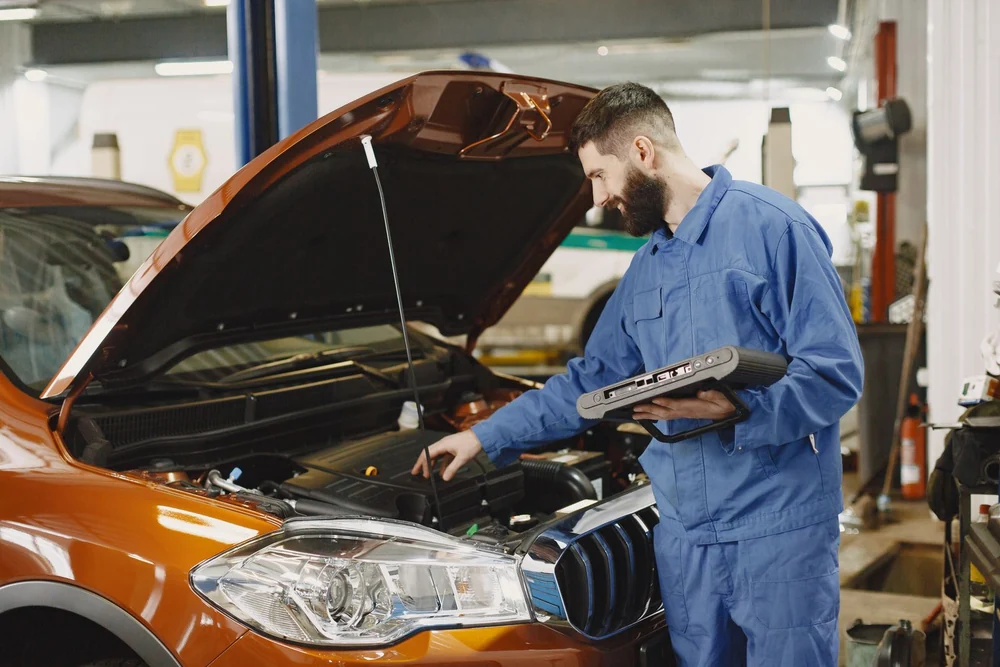
Ask what visual checks, lift examination, fault-code reading, road testing and document review are included. Request exclusions too. An OBD scan supplies information; it cannot establish every aspect of bodywork, engine condition or mileage. Paint readings also require interpretation. RAR describes its eXpert assessment as reflecting the vehicle at the time of examination. Confirm current availability, booking arrangements and scope with the provider. Do not assume that a familiar service name guarantees identical checks at every location.
Make the appointment practical
Agree the location, timing and journey to the workshop. Arrange access to the car and documents, not only the listing photographs. If a specialist needs a cold start for a particular observation, discuss that in advance: arrival after a long journey cannot recreate the same conditions. Leave time to understand the results. Scheduling final payment immediately after the appointment makes new findings harder to evaluate. Inspection should inform the decision before payment and handover are treated as inevitable.
Separate findings from conclusions
A useful report explains what was observed, how it was checked and what further work may be needed. Signs of a leak are an observation; identifying its cause and repair cost may require investigation. Ask for photographs where useful. Clarify whether a fault code was active, stored or recorded during the test rather than diagnosing it yourself from an internet search. “They all do that” is not an adequate explanation when the specialist has left a question unresolved.
Turn findings into a budget
Separate safety work, approaching maintenance and cosmetic preferences. For significant work, obtain an estimate covering parts, labour and associated operations. Do not convert every observation into a guessed discount. Keep confirmed costs, estimates and an uncertainty reserve separate. A cheaper advertised car may need immediate expenditure that another example already has documented. Explain those differences when negotiating. Comparing estimates for the same scope is more useful than comparing an inclusive quote with a parts-only price.
State the remaining conditions
If you proceed, write down the proposed price and outstanding conditions, such as documents, repair work or a confirmation inspection. State who pays and what evidence will be supplied. “Inspected” should not be used as a synonym for “fault-free”. Save the report and the conversation recording the agreement. New information can justify declining the purchase. Paying for an inspection buys information; it does not create an obligation to accept the vehicle.
Keep the limits after purchase
A one-off examination cannot predict every future defect or make a commercial warranty cover every problem. Read the actual contract. ANPC provides guidance for consumers buying used cars from professional sellers; transactions with private sellers do not have the same consumer-law framework. Retain the dated report, mileage and agreed work for future servicing. Those details are more useful than a generic badge or a message saying the car passed a check.
When you cannot attend
Speak to the workshop directly and agree who receives the report and how you can ask questions. Request identification of the vehicle in the document, relevant photographs and an explanation of limitations. Anybody attending for you should know the permitted scope and which decisions remain yours. A video call does not substitute for every agreed check. If remote explanations are insufficient, postpone acceptance rather than replacing missing evidence with assumed confidence. Ask the inspector to separate urgent concerns from optional work, so that a long list of observations does not conceal the point that actually changes your decision.